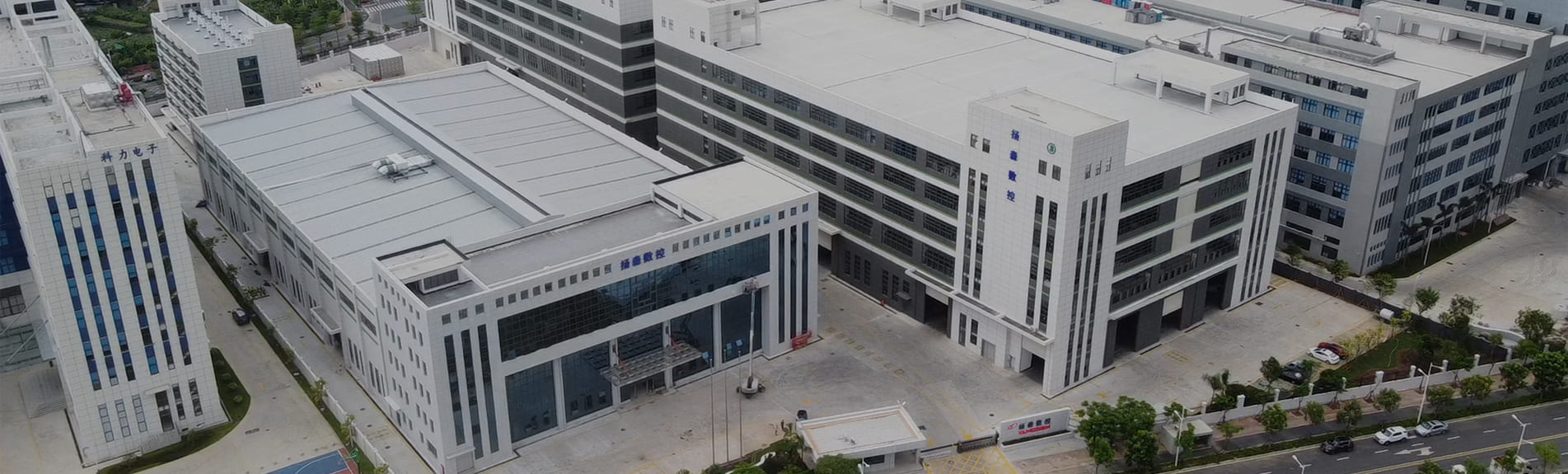
Semiconductor manufacturing depends on precision equipment that must operate reliably under demanding conditions. Wafer processing, vacuum systems, and automated handling equipment rely on mechanical components manufactured to specific dimensional, material, and surface requirements. CNC machining plays an important role in producing these components, including mounting plates, chamber parts, manifolds, positioning stages, and cooling blocks.
However, manufacturing semiconductor equipment parts involves more than achieving the dimensions shown on an engineering drawing. Thermal expansion, material distortion, surface imperfections, machining burrs, and contamination can affect component performance even when individual dimensions meet their specified tolerances.
These challenges require careful machine selection, process planning, and inspection. Understanding the common problems and their practical solutions helps equipment manufacturers choose suitable machining methods, improve component consistency, and reduce unnecessary rework.
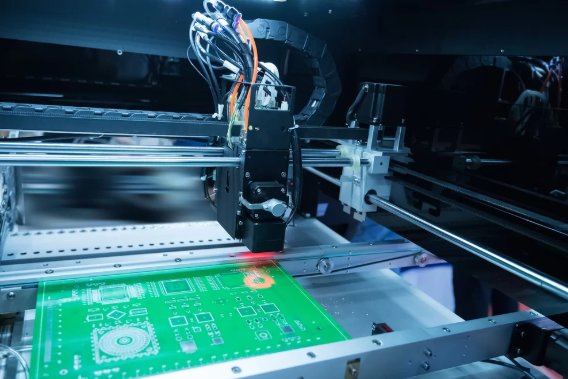
Semiconductor CNC machining is a subtractive manufacturing process used to produce mechanical components for equipment involved in wafer handling, vacuum processing, gas delivery, thermal management, and precision positioning. CNC milling, turning, drilling, boring, and tapping create the required features from materials such as aluminium alloys, stainless steel, copper, and engineering plastics.
Depending on the component design, manufacturing may involve three-axis machining, multi-axis machining, or a combination of milling and turning operations. Unlike semiconductor fabrication itself, which produces integrated circuits through processes such as lithography, deposition, and etching, semiconductor CNC machining manufactures the physical parts that support these processes.
Component requirements vary by function and operating environment. A vacuum chamber may require accurately machined sealing surfaces, while a wafer-positioning component may depend on dimensional stability and precise feature locations. Selecting the right machining process therefore requires evaluating the engineering drawing, material properties, functional interfaces, and inspection requirements.
Semiconductor manufacturing equipment contains a wide range of precision mechanical components. Their geometries, materials, and machining requirements depend on how they interact with wafers, vacuum systems, motion assemblies, and temperature-control equipment. Understanding these applications helps manufacturers determine suitable machining strategies and identify critical features before production begins.
Wafer handling systems transport, support, and position delicate semiconductor wafers throughout manufacturing. CNC-machined components may include wafer stages, chuck bases, end-effectors, carrier plates, alignment blocks, and positioning mounts. These parts often require carefully controlled mounting interfaces, accurate hole locations, and stable reference surfaces to support reliable equipment operation.
Vacuum and process equipment commonly uses chamber bodies, chamber lids, flanges, vacuum plates, access covers, and adapter rings. These components may contain large cavities, threaded ports, sealing grooves, mounting holes, and interfaces for connecting pumps or other equipment. CNC machining produces these features to the dimensions and geometric requirements specified on the engineering drawing.
Gas manifolds, valve blocks, distribution blocks, and coolant manifolds help route gases or fluids through semiconductor equipment. These components typically require drilled passages, intersecting holes, threaded connections, mounting features, and accurately positioned ports. CNC machining can produce these features in a single block or through a sequence of coordinated operations.

Cold plates, heat sinks, cooling blocks, and other thermal management components help control operating temperatures in equipment assemblies. Their designs may incorporate cooling channels, mounting holes, thin fins, and flat contact surfaces. CNC milling and drilling commonly create these features, with the machining strategy selected based on the component's geometry and material.
Fixtures, brackets, sensor mounts, motor mounts, optical supports, and equipment housings provide structural support and accurate mounting locations for semiconductor machinery. These parts may seem simpler than vacuum chambers or manifolds, but their hole patterns, mating surfaces, and mounting features can affect the alignment of assembled equipment.
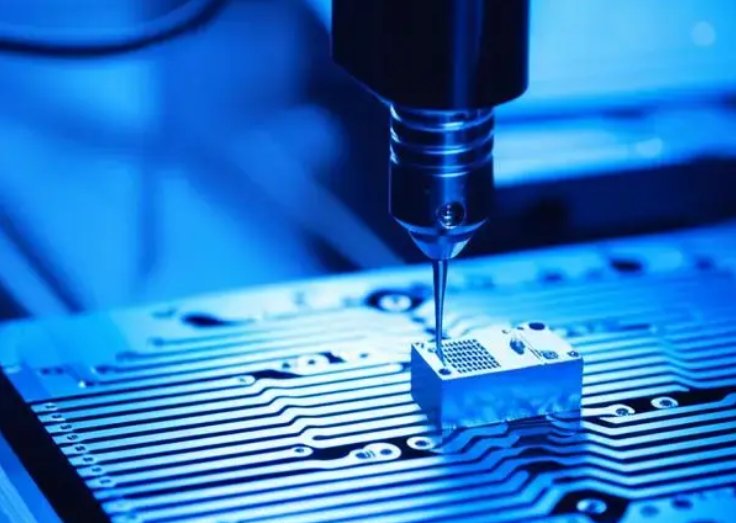
Semiconductor CNC machining requires careful control over dimensional accuracy, temperature, material behaviour, surface quality, and cleanliness. Understanding these challenges helps manufacturers reduce defects, maintain consistency, and produce reliable equipment components.
Semiconductor equipment parts often require accurate hole positions, bore diameters, and mounting dimensions. Tool wear, machine positioning errors, and inconsistent setups can cause dimensional variations.
Manufacturers can improve repeatability by using suitable cutting tools, consistent reference points, controlled tool offsets, and regular dimensional inspections.
Heat generated during machining and changes in the surrounding temperature can affect machine performance and workpiece dimensions. Aluminium components are particularly sensitive to temperature changes, which can lead to measurement differences.
Using machine warm-up procedures, maintaining stable temperatures, and allowing components to cool before inspection help improve dimensional accuracy.
Large aluminium plates may bend or twist when significant material is removed. This happens because machining releases internal stresses and reduces the workpiece's structural rigidity.
Manufacturers can minimise distortion by removing material in stages, leaving finishing stock, using controlled clamping forces, and checking the part after unclamping.
Uneven sealing or mounting surfaces can affect component alignment and sealing performance. Excessive cutting forces, thermal deformation, and unsuitable workholding can contribute to flatness errors.
Stable fixtures, controlled finishing passes, and appropriate measurement methods help ensure that critical surfaces meet the drawing requirements.
Machining can leave burrs, metal chips, and residues inside holes, pockets, and internal passages. These contaminants can damage sensitive equipment or block gas and fluid pathways.
Proper deburring, suitable cleaning methods, effective chip removal, and protective packaging help maintain the required cleanliness of finished components.
Semiconductor components may contain deep pockets, angled holes, and features across multiple faces. Repeated setups can introduce positioning errors and make tool access difficult.
Manufacturers can improve accuracy by using appropriate fixtures, consistent reference points, and the right 3-axis, 3+2-axis, or 5-axis machining approach for the component's geometry.
Materials such as stainless steel, copper, engineering plastics, and ceramics present different machining challenges. Stainless steel can generate substantial heat, copper may produce built-up edges, plastics can deform, and ceramics can chip or crack.
Selecting material-specific cutting tools, machining parameters, cooling methods, and finishing processes helps achieve the required quality.
Thin walls can deform under cutting forces, while deep pockets often require long tools that are more susceptible to vibration. These problems can affect dimensional accuracy and surface finish.
Manufacturers can reduce vibration by minimising tool overhang, using suitable cutting parameters, removing material in stages, and applying lighter finishing passes.
A component may meet its specified surface roughness while still containing scratches, burrs, or other defects. The Ra value alone does not establish flatness, cleanliness, or leak-tightness.
Manufacturers should define surface requirements according to the component's function and use appropriate finishing, cleaning, and inspection methods to verify compliance.
Semiconductor equipment components may require documented proof of dimensional accuracy, material quality, and finishing requirements. Incomplete inspection reports or missing material records can delay approval and production.
Using appropriate measurement instruments, maintaining calibrated equipment, and linking material certificates and inspection reports to the relevant part numbers help ensure traceability and consistent quality.
Selecting a CNC machining centre for semiconductor components requires evaluating the complete manufacturing requirement rather than choosing a machine based only on its advertised accuracy or number of axes. Workpiece size, material, feature geometry, required tolerances, production quantity, and inspection method all affect which machine is suitable.
The following table links common machining challenges with machine features and supporting process controls that can help address them.
|
Machining challenge |
Machine feature to consider |
How it helps |
|
Tight tolerances and repeatability |
Stable machine structure, suitable positioning performance, and a reliable control system |
Supports consistent feature positioning when combined with calibrated tools and controlled processes |
|
Thermal expansion and machine heat drift |
Thermal compensation, temperature monitoring, and appropriate spindle warm-up procedures |
Helps reduce errors caused by changing machine temperatures |
|
Distortion in large aluminium plates |
Suitable work envelope, stable workholding, and access for staged machining |
Supports balanced material removal and controlled finishing operations |
|
Poor flatness on sealing faces |
Stable spindle, suitable finishing capability, and appropriate face-milling tools |
Helps produce controlled surface geometry when the workpiece is adequately supported |
|
Burrs and internal contamination |
Appropriate tooling options, accessible machining orientations, and compatible coolant or chip-management systems |
Helps reduce burr formation and improve chip evacuation; cleaning must still be planned separately |
|
Complex geometry and multi-face features |
Four-axis, 3+2-axis, or simultaneous five-axis capability as required |
Provides access to additional faces and can reduce repeated setups |
|
Stainless steel and other demanding materials |
Suitable spindle torque, rigid toolholding, and appropriate coolant delivery |
Supports stable cutting under material-specific machining conditions |
|
Thin walls and deep pockets |
Stable spindle and toolholding, suitable tool reach, and flexible feed and speed control |
Helps control vibration and cutting forces |
|
Specified surface finish |
Suitable spindle performance, toolpath control, and finishing-tool compatibility |
Supports the required surface condition when tooling and cutting parameters are correctly selected |
|
Inspection and traceability |
Compatible measurement systems, tool-offset management, and production data capabilities |
Helps maintain process consistency and connect inspection results to the relevant part or batch |
|
Material |
Advantages |
Machining risks |
Typical parts |
|
Aluminum 6061 |
Lightweight, machinable, good thermal conductivity |
Thermal expansion and distortion |
Plates, housings, mounting bases |
|
Aluminum 7075 |
High strength-to-weight ratio |
Stress-related distortion and application-specific corrosion concerns |
Structural brackets, precision supports |
|
Stainless steel |
Strength and corrosion resistance |
Heat generation and tool wear |
Flanges, chamber components, fittings |
|
Copper |
High electrical and thermal conductivity |
Built-up edges and surface smearing |
Thermal components, electrical contacts |
|
Brass |
Good machinability and corrosion resistance for suitable environments |
Burr formation and grade-dependent compatibility |
Fittings, connectors, adapters |
|
PEEK |
Chemical resistance, strength, and electrical insulation |
Heat-related deformation and dimensional variation |
Insulators, guides, precision spacers |
|
POM |
Low friction and good machinability |
Dimensional changes from temperature or moisture conditions |
Guides, bushings, fixtures |
|
PTFE |
Excellent chemical resistance and low friction |
Softness, deformation, and difficult dimensional control |
Seals, liners, chemical-resistant components |
|
Technical ceramics |
Hardness, thermal stability, and electrical insulation in suitable grades |
Brittleness, chipping, and specialised machining requirements |
Insulators, wear-resistant components |
CNC machining supports several industries that require precision-engineered components, consistent quality, and reliable performance. Beyond semiconductor manufacturing, it plays an important role in electronics, medical equipment, aerospace, automotive, robotics, and industrial automation.
CNC machining manufactures electronic equipment housings, mounting plates, heat sinks, and precision enclosures. These components provide structural support, protect sensitive electronics, and help dissipate heat during operation.
In the medical industry, CNC machining produces instrument components, equipment frames, and precision mechanical parts. For medical devices, material compatibility, dimensional accuracy, and smooth surface finishes are critical.
Aerospace and automotive manufacturers use CNC-machined components for structural assemblies, lightweight housings, engine-related components, and thermal management systems. They commonly select aluminium alloys and stainless steel based on strength, weight, and operating conditions.
Robotic systems and automated production equipment depend on precision brackets, mounting plates, shafts, fixtures, and mechanical housings. CNC machining helps maintain dimensional consistency, accurate alignment, and repeatable movement across these components.
Optical systems require accurately machined mounts, alignment fixtures, structural frames, and positioning components. Tight tolerances and stable mounting surfaces help maintain the correct alignment of lenses, sensors, and other optical elements.
Vacuum and thermal management systems also depend on accurately machined fittings, chamber components, cooling plates, and heat sinks. These parts require suitable materials, accurate sealing surfaces, and carefully controlled machining processes to perform reliably under demanding operating conditions.
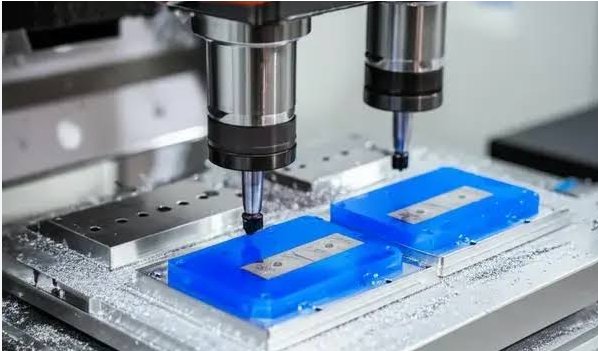
CNC YANGSEN provides CNC machine solutions for manufacturing precision components used in semiconductor equipment and related industrial applications. Vertical machining centers, CNC lathes, and multi-axis machines support milling, turning, and complex-geometry operations for mounting features and tight-tolerance components.
Material selection, machining strategies, surface finishing, and quality inspection are important parts of the manufacturing process. By considering component design, material properties, and application requirements, CNC YANGSEN friqz customers identify suitable machine solutions for their projects.
Choosing the right CNC machine for semiconductor parts requires careful consideration of component size, material, accuracy requirements, and production volume. Focus on these checklist items.
1. Which industries use CNC machining besides semiconductor manufacturing?
CNC machining is widely used in electronics, medical equipment, aerospace, automotive, robotics, and industrial automation. These industries require precision components with accurate dimensions, consistent quality, and reliable performance.
2. Why is CNC machining important for the electronics industry?
CNC machining produces electronic enclosures, mounting plates, heat sinks, and equipment housings. These components protect sensitive electronics, provide structural support, and help manage operational heat.
3. What CNC-machined parts are used in medical equipment?
Common parts include instrument components, equipment frames, precision housings, and mechanical assemblies. Depending on the application, these parts may require specific materials, smooth surface finishes, and tight dimensional tolerances.
4. How does CNC machining benefit the aerospace and automotive industries?
CNC machining produces accurate structural components, lightweight housings, and thermal management parts. It also supports repeatable manufacturing, helping manufacturers maintain consistent component quality across production batches.
5. What CNC-machined components are used in robotics and automation?
Robotics and automation systems use precision brackets, shafts, mounting plates, fixtures, and mechanical housings. Accurate machining helps maintain component alignment, smooth movement, and reliable operation.
6. Why is precision important in optical equipment manufacturing?
Optical equipment relies on accurately positioned lenses, sensors, and other optical elements. CNC-machined mounts and alignment fixtures help maintain positioning accuracy and reduce errors that could affect system performance.
CNC machining plays an important role in semiconductor manufacturing and other industries that require precision-engineered components. Choosing the right materials, machine configurations, and quality control methods is essential to achieving reliable results.
Looking for CNC machining solutions for semiconductor equipment or other industrial applications? CNC YANGSEN can help you explore suitable CNC machine options based on your part design, material, tolerance requirements, and production volume.
Contact CNC Yangsen to find the right CNC machining solution for your production needs.

ETIQUETAS :