
En el mecanizado CNC, un cambio de herramienta lento puede reducir seriamente la eficiencia de la producción.
Si su máquina se detiene con frecuencia para cambiar las herramientas, los tiempos de ciclo se alargan, la eficiencia del mecanizado disminuye y la producción automatizada se dificulta, especialmente al mecanizar piezas complejas que requieren varias herramientas.
Por eso, los cambiadores automáticos de herramientas (ATC) son tan importantes en las máquinas CNC modernas.
Sin embargo, los diferentes tipos de cambiadores automáticos de herramientas ofrecen diferentes ventajas. Algunos se centran en cambios de herramientas más rápidos, algunos proporcionan mayor capacidad de herramientas, mientras que otros están diseñados para máquinas compactas o mecanizado de alta resistencia.
Comprender las diferencias entre los distintos tipos de cambiadores automáticos de herramientas (ATC) puede ayudarle a elegir la máquina CNC más adecuada para sus necesidades de producción.
Un cambiador automático de herramientas (ATC, por sus siglas en inglés) es un sistema utilizado en máquinas CNC para cambiar automáticamente las herramientas de corte durante el mecanizado sin necesidad de intervención manual.
Cuando un programa de mecanizado requiere una herramienta diferente para taladrar, fresar, roscar o mandrinar, el cambiador automático de herramientas (ATC) retira rápidamente la herramienta actual y carga la siguiente en el husillo. Esto permite que la máquina continúe mecanizando sin detener la producción.
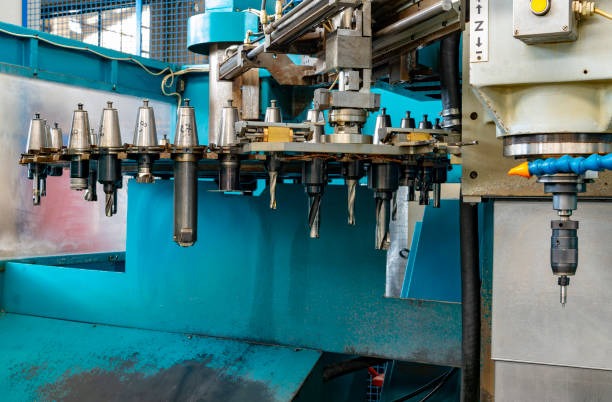
Un cambiador automático de herramientas típico suele incluir:
En comparación con el cambio manual de herramientas, un sistema ATC ayuda a:
Hoy en día, los cambiadores automáticos de herramientas se utilizan ampliamente en centros de mecanizado verticales, centros de mecanizado horizontales, centros de mecanizado de pórtico y Máquinas CNC de 5 ejesespecialmente para piezas que requieren múltiples operaciones de mecanizado en una sola configuración.
Las distintas máquinas CNC utilizan diferentes sistemas de cambio automático de herramientas según los requisitos de mecanizado, la cantidad de herramientas, la eficiencia de producción y la estructura de la máquina. A continuación, se muestran los tipos de cambiadores automáticos de herramientas más comunes utilizados en los centros de mecanizado CNC.
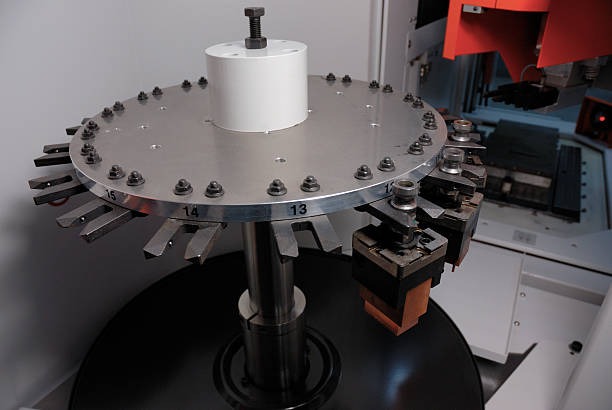
El cambiador automático de herramientas tipo paraguas se utiliza comúnmente en máquinas pequeñas y medianas. centros de mecanizado vertical.
Las herramientas están dispuestas verticalmente en un cargador circular, y el husillo se mueve directamente a la posición de la herramienta durante el cambio de herramientas.
Ventajas:
Limitaciones:
Aplicaciones comunes:
El cambiador automático de herramientas de tipo brazo utiliza un brazo mecánico para intercambiar automáticamente las herramientas entre el husillo y el almacén de herramientas.
Este es uno de los sistemas ATC más comunes utilizados en centros de mecanizado CNC de alta velocidad.
Ventajas:
Limitaciones:
Aplicaciones comunes:
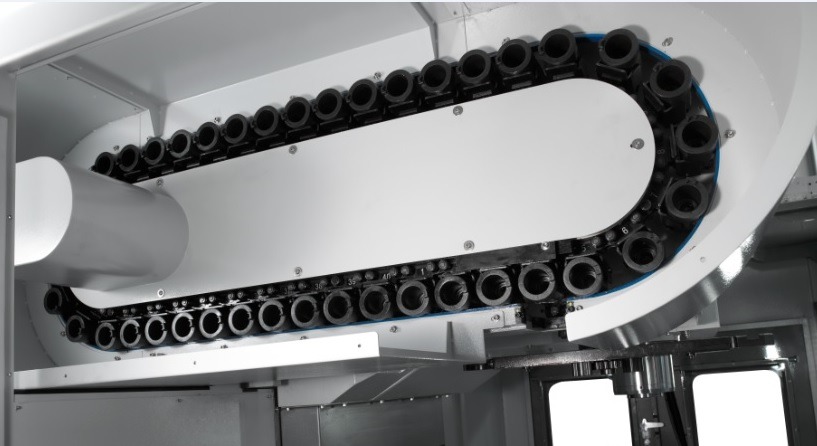
El cambiador automático de herramientas de tipo cadena utiliza un almacén de herramientas accionado por cadena con gran capacidad de almacenamiento.
Este diseño se utiliza habitualmente en grandes máquinas CNC que requieren muchas herramientas durante el mecanizado.
Ventajas:
Limitaciones:
Aplicaciones comunes:
El cambiador automático de herramientas tipo carrusel utiliza un almacén de herramientas circular giratorio montado al lado o encima del husillo.
Se utiliza ampliamente en centros de mecanizado CNC de tamaño mediano.
Ventajas:
Limitaciones:
Aplicaciones comunes:
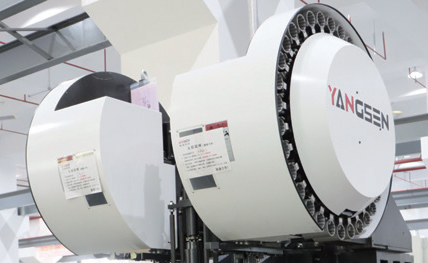
El cambiador automático de herramientas (ATC) de tipo tambor almacena las herramientas alrededor de una estructura de tambor giratoria.
Este tipo está diseñado para máquinas compactas que requieren un posicionamiento de herramientas relativamente rápido.
Ventajas:
Limitaciones:
Aplicaciones comunes:
El cambiador automático de herramientas de tipo lineal dispone las herramientas en un soporte en línea recta en lugar de un cargador circular.
Este tipo se suele utilizar en máquinas CNC personalizadas o en sistemas de mecanizado especiales.
Ventajas:
Limitaciones:
Aplicaciones comunes:
Los distintos tipos de cambiadores automáticos de herramientas ofrecen diferentes ventajas en cuanto a velocidad de cambio, capacidad de herramientas, tamaño de máquina y aplicaciones de mecanizado. La elección del cambiador automático de herramientas adecuado depende de los requisitos de producción y del entorno de mecanizado.
Tipo ATC | Velocidad de cambio de herramienta | Capacidad de la herramienta | Espacio de máquinas | Costo | Lo mejor para |
ATC tipo paraguas | Lento | Bajo | Compacto | Bajo | Centros de mecanizado vertical pequeños y mecanizado ligero |
Tipo de brazo ATC | Muy rápido | De medio a alto | Medio | Más alto | Mecanizado de alta velocidad y automatizado |
Cadena tipo ATC | Rápido | Muy alto | Grande | Alto | Mecanizado complejo y grandes máquinas CNC |
ATC tipo carrusel | Medio | Medio | Compacto | Medio | Mecanizado CNC general |
ATC tipo tambor | De medio a rápido | Medio | Compacto | Medio | Centros de mecanizado compactos |
ATC de tipo lineal | Lento | Medio | Longitud de instalación mayor | Medio | Sistemas CNC personalizados |
Si la eficiencia de producción es la prioridad, los sistemas ATC de tipo brazo suelen ser los más rápidos porque pueden intercambiar herramientas rápidamente con un brazo mecánico.
Los cambiadores de herramientas automáticos (ATC) de tipo paraguas y lineal son más lentos, por lo que resultan más adecuados para aplicaciones de mecanizado más ligeras.
Los cambiadores automáticos de herramientas de tipo cadena ofrecen la mayor capacidad de almacenamiento de herramientas y son más adecuados para piezas complejas que requieren muchas herramientas de corte.
Los cambiadores automáticos de herramientas tipo paraguas suelen tener una capacidad de herramientas limitada y son más adecuados para tareas de mecanizado sencillas.
Los cambiadores automáticos de contenedores (ATC) de tipo paraguas, carrusel y tambor son más compactos y adecuados para máquinas con espacio de instalación limitado.
Los cambiadores automáticos de tipo cadena requieren más espacio en la máquina debido a su estructura de cargador más grande.
Los sistemas de control de tráfico aéreo tipo paraguas suelen ser la opción más económica.
Los sistemas de cambio automático de paquetes (ATC) de tipo brazo y de tipo cadena cuestan más debido a su mayor velocidad, mayor capacidad y estructura más compleja.
No existe un único tipo de cambiador automático de herramientas que sea el "mejor".
Para un mecanizado compacto y rentable, los cambiadores automáticos de herramientas tipo paraguas o carrusel son opciones comunes.
Para la producción a alta velocidad, los cambiadores automáticos de tipo brazo son más adecuados.
Para piezas grandes y mecanizados complejos, los cambiadores automáticos de herramientas de tipo cadena ofrecen mayor flexibilidad y mayor capacidad de herramientas.
El cambiador de herramientas automático (ATC) adecuado depende de sus requisitos de mecanizado, volumen de producción y objetivos de automatización.
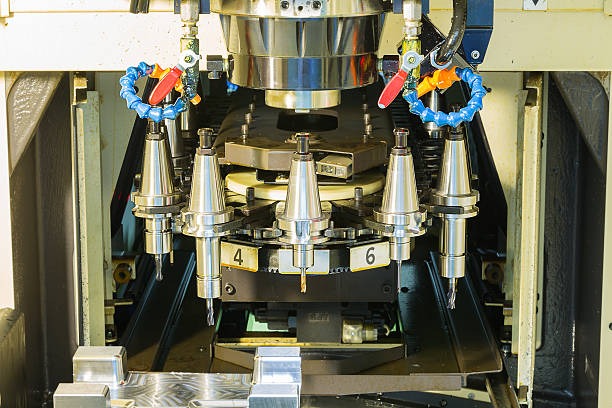
No todas las máquinas CNC necesitan un cambiador automático de herramientas grande o de alta velocidad. El cambiador automático de herramientas adecuado depende de cómo se mecanizan las piezas en la producción diaria.
Si principalmente procesa piezas sencillas con pocas herramientas, un sistema ATC compacto suele ser suficiente. Pero si su mecanizado implica múltiples operaciones, cambios frecuentes de herramientas o ciclos de producción largos, un ATC de mayor capacidad cobra mayor importancia.
A la hora de elegir un sistema ATC, hay varios factores clave a tener en cuenta.
En la producción a gran escala, cada segundo de tiempo de cambio de herramienta afecta a la eficiencia general del mecanizado.
Los sistemas ATC más rápidos ayudan a reducir el tiempo de ciclo.
Los cambios lentos de herramientas aumentan el tiempo de inactividad de la máquina.
El mecanizado de alta velocidad generalmente requiere un rendimiento del ATC más rápido.
Los cambiadores de trenes de tipo brazo se utilizan habitualmente cuando la velocidad de producción es la prioridad.
Las distintas piezas requieren un número diferente de herramientas de corte.
Para el mecanizado sencillo, un pequeño almacén de herramientas puede ser suficiente. Sin embargo, las piezas complejas a menudo requieren:
Los sistemas ATC de mayor tamaño ayudan a reducir el cambio manual de herramientas y a mejorar la continuidad del mecanizado.
Un sistema ATC estable es importante para la precisión del mecanizado y la fiabilidad a largo plazo.
Un posicionamiento incorrecto de la herramienta o un intercambio de herramientas inestable pueden causar:
En la producción de ciclo largo, la estabilidad del cambiador automático de herramientas (ATC) suele ser más importante que la velocidad de cambio de herramienta.
Algunos sistemas ATC requieren más espacio para su instalación.
Las máquinas compactas suelen utilizar cambiadores automáticos de herramientas (ATC) de tipo paraguas o carrusel, mientras que los centros de mecanizado más grandes pueden admitir sistemas de tipo cadena con mayor capacidad de herramientas.
La estructura de la máquina influye directamente en el tipo de cambiador automático de mercancías (ATC) que se puede instalar.
Los sistemas ATC más complejos suelen requerir más mantenimiento.
Antes de elegir un ATC, muchos fabricantes también consideran:
Un sistema ATC más sencillo puede reducir el tiempo de inactividad por mantenimiento y la complejidad operativa.
Las distintas industrias tienen diferentes requisitos de control de tráfico aéreo (ATC).
El mecanizado de moldes a menudo requiere un cambio de herramienta más rápido.
El mecanizado aeroespacial generalmente requiere una mayor capacidad de herramientas.
El mecanizado de precisión general puede centrarse más en la eficiencia de costes.
Las líneas de producción automatizadas requieren un funcionamiento estable y de ciclo largo.
Elegir un sistema ATC que se ajuste a sus necesidades de producción reales es más importante que simplemente elegir el sistema más grande.
¿Cuál es el tipo de cambiador automático de herramientas más utilizado?
Los cambiadores automáticos de herramientas (ATC) de brazo y de carrusel son los más utilizados en los centros de mecanizado CNC. Los ATC de brazo son populares para el mecanizado de alta velocidad, mientras que los sistemas de carrusel se utilizan ampliamente en centros de mecanizado vertical en general debido a su equilibrio entre costo y rendimiento.
¿Qué tipo de cambiador automático de herramientas (ATC) es el mejor para el mecanizado de alta velocidad?
Los cambiadores automáticos de herramientas de brazo suelen ser la mejor opción para el mecanizado de alta velocidad, ya que permiten un cambio de herramientas más rápido y reducen el tiempo improductivo. Se utilizan habitualmente en el mecanizado de moldes, piezas aeroespaciales y producción automatizada.
¿Cuántas herramientas puede contener un cambiador automático de herramientas?
La capacidad de la herramienta depende del diseño del cambiador automático de herramientas (ATC). Los ATC pequeños de tipo paraguas pueden albergar entre 12 y 24 herramientas, mientras que los sistemas grandes de tipo cadena pueden almacenar más de 60 o incluso 100 herramientas para aplicaciones de mecanizado complejas.
¿Por qué las grandes máquinas CNC utilizan cambiadores automáticos de tipo cadena?
Las grandes máquinas CNC suelen mecanizar piezas complejas que requieren numerosas herramientas de corte. Los cambiadores automáticos de herramientas (ATC) de tipo cadena ofrecen mayor capacidad de herramientas y mejor flexibilidad para el mecanizado de ciclo largo y las operaciones multiproceso.
¿Cuáles son las causas de las fallas en los cambiadores automáticos de herramientas?
Los problemas más comunes en los cambiadores automáticos de herramientas (ATC) incluyen errores de posicionamiento de la herramienta, fallos en los sensores, lubricación insuficiente, desgaste de los componentes mecánicos e instalación incorrecta del portaherramientas. El mantenimiento regular contribuye a mejorar la fiabilidad del ATC y a reducir el tiempo de inactividad de la máquina.
¿Con qué frecuencia se debe realizar el mantenimiento de un sistema ATC?
La inspección y el mantenimiento regulares son importantes para un rendimiento estable del cambiador automático de herramientas (ATC). La lubricación, la comprobación de los sensores, la inspección del portaherramientas y la limpieza deben realizarse periódicamente para reducir los errores en el cambio de herramientas y los tiempos de inactividad inesperados.
Un buen cambiador automático de herramientas hace más que simplemente cambiar herramientas: afecta directamente a la eficiencia del mecanizado, al tiempo de ciclo y a la estabilidad de la producción.
Los distintos tipos de cambiadores automáticos de herramientas (ATC) están diseñados para diferentes necesidades de mecanizado. Elegir el sistema adecuado puede ayudar a reducir el tiempo de inactividad, mejorar la automatización y hacer que el mecanizado complejo sea más eficiente.
Si su producción aún se ve limitada por cambios de herramienta lentos o una capacidad de herramientas insuficiente, el sistema ATC puede ser uno de los factores más importantes a considerar al seleccionar una máquina CNC.