
El refrigerante para máquinas CNC es esencial para los procesos de mecanizado, ya que ayuda a mantener niveles adecuados de temperatura, reduce la fricción y permite operaciones de corte estables. Las altas temperaturas, resultantes del contacto continuo entre la herramienta y la pieza de trabajo y la acumulación de viruta durante las operaciones de mecanizado CNC, pueden afectar tanto la precisión del mecanizado como la durabilidad del equipo.
Sin embargo, no todos los refrigerantes para máquinas CNC son compatibles con todos los entornos de mecanizado. Los requisitos específicos de las propiedades del refrigerante varían según las máquinas y los materiales que manejan, así como sus velocidades de corte y entornos de taller particulares. Los usuarios que seleccionen un refrigerante incorrecto experimentarán múltiples problemas, como un acabado superficial deficiente, mayor deterioro de la herramienta, corrosión del material, olores desagradables y mayores gastos de mantenimiento del equipo.
Esta guía tiene como objetivo ayudar a los lectores a encontrar el refrigerante óptimo para máquinas CNC que se ajuste a sus necesidades de mecanizado específicas. El conocimiento de las funciones del refrigerante, junto con sus diferencias de rendimiento, permitirá a los fabricantes aumentar la productividad y proteger sus equipos, a la vez que logran resultados de mecanizado consistentes y fiables.
El mecanizado CNC requiere un refrigerante con características funcionales específicas para un mecanizado eficaz en múltiples actividades operativas. El refrigerante debe ofrecer una transferencia de calor óptima, que proteja las herramientas de daños y detenga la expansión térmica de las piezas. Una lubricación adecuada ayuda a reducir la fricción de la herramienta de corte contra las superficies del material, lo que resulta en una mejor calidad superficial y una mayor vida útil de la herramienta.
El refrigerante debe permitir la correcta eliminación de virutas, manteniendo la estabilidad química durante el funcionamiento prolongado de la máquina y protegiendo el equipo contra la oxidación. La selección de un refrigerante inadecuado ocasiona diversos problemas que generan cortes impredecibles, además de aumentar el daño a la herramienta, la proliferación de bacterias, la incomodidad de los operadores y el mantenimiento.
La eficiencia de producción de un sistema depende del rendimiento de su sistema de refrigeración. Los requisitos operativos, las especificaciones de los materiales y las necesidades de protección de los equipos en entornos de mecanizado CNC requieren soluciones de refrigeración específicas.
Los refrigerantes para máquinas CNC se dividen en dos categorías principales, cada una con una composición química diferente que les confiere sus características operativas distintivas. Cada categoría ofrece ventajas específicas que dependen de los procesos de mecanizado, los materiales y los requisitos de producción.
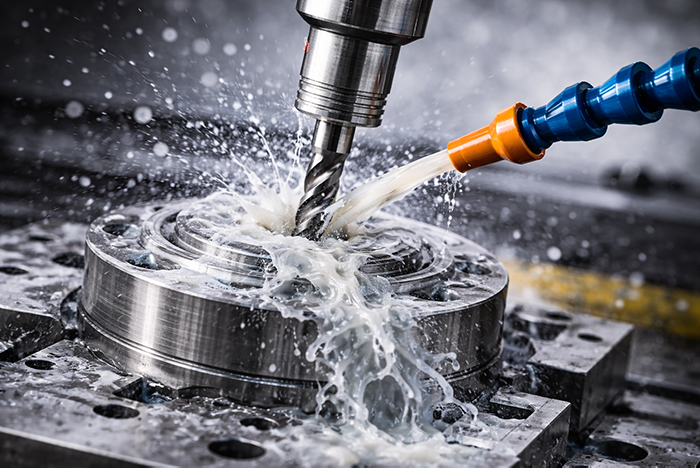
Los refrigerantes a base de agua, también conocidos como refrigerantes solubles o de emulsión, se crean mediante la combinación de concentrado refrigerante y agua. El producto contiene aceites emulsionados junto con inhibidores de corrosión y aditivos que mejoran la lubricación y la refrigeración. La mayoría de Máquinas CNC y los materiales, que incluyen acero, aluminio y hierro fundido, pueden utilizar estos refrigerantes.
Los refrigerantes a base de agua consiguen una disipación térmica perfecta para el corte a alta velocidad y la producción continua en operaciones de mecanizado CNC. Ayudan a mantener la estabilidad dimensional, a la vez que mejoran la calidad del acabado superficial y permiten un proceso de arranque de viruta eficaz.
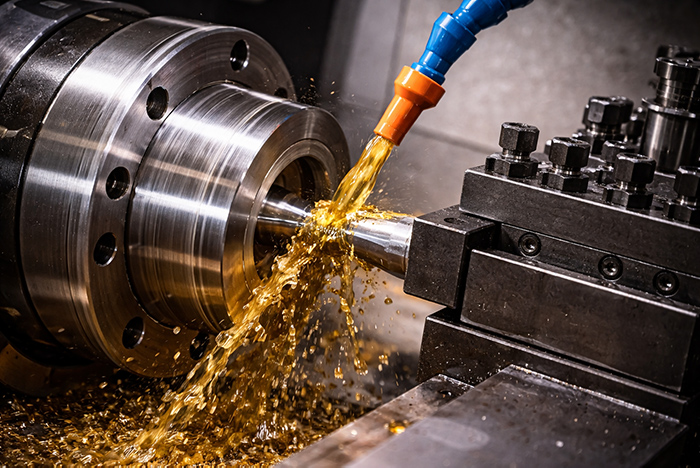
Los refrigerantes de aceite puro utilizan fluidos derivados del petróleo o minerales, que los operadores aplican en su forma original, sin diluir. El producto contiene aceites lubricantes y aditivos que mejoran el rendimiento, pero no contiene agua. Estos refrigerantes proporcionan una excelente lubricación, lo que resulta útil para determinadas actividades de mecanizado que requieren una menor fricción.
Los aceites directos proporcionan un rendimiento eficaz en el mecanizado CNC durante operaciones de baja velocidad, que implican cargas pesadas y requieren lubricación superior a la refrigeración. El sistema ayuda a reducir el desgaste de la herramienta y a mejorar la calidad de la superficie en situaciones de corte difíciles.
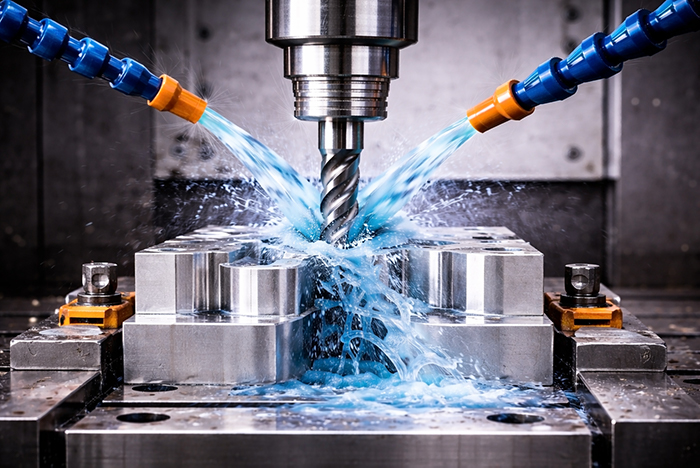
Los refrigerantes sintéticos son fluidos a base de agua sin aceite mineral. Contienen compuestos químicos, inhibidores de corrosión y aditivos, lo que crea un refrigerante que mantiene su pureza operativa. Funcionan eficazmente con maquinaria CNC, lo que requiere un funcionamiento sin contaminación y con mínimas emisiones de residuos.
Los refrigerantes sintéticos ofrecen una potente capacidad de refrigeración y una limpieza superior, lo que los hace ideales para el mecanizado CNC de alta velocidad y para operaciones que requieren una visibilidad sin obstáculos de la zona de corte. El sistema ayuda a reducir la acumulación de residuos en los componentes de la máquina.
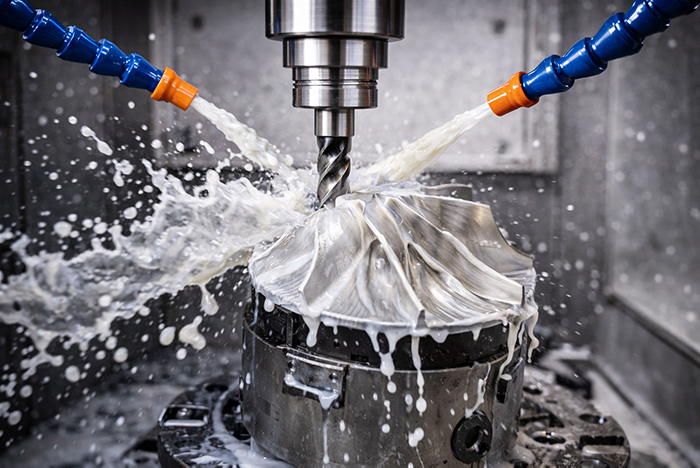
Los refrigerantes semisintéticos contienen emulsiones a base de agua y fluidos sintéticos. El producto contiene un pequeño porcentaje de aceite junto con aditivos químicos, lo que proporciona una combinación de lubricación y refrigeración. La mayoría de las máquinas y materiales CNC son compatibles con este producto.
La capacidad de enfriamiento de los refrigerantes semisintéticos, junto con su excelente limpieza, permite su uso en todas las operaciones de mecanizado CNC que requieren zonas de corte limpias. El sistema proporciona una gestión térmica eficiente, junto con una lubricación moderada y una menor producción de espuma.
Factor de selección | Por qué es importante | Mejores consejos / Prácticas recomendadas |
Aplicación de mecanizado | Diferentes operaciones CNC generan diferentes niveles de calor y condiciones de corte. | Seleccione el tipo de refrigerante adecuado que coincida con sus principales actividades de mecanizado, que incluyen fresado, torneado y taladrado. |
Compatibilidad de materiales | Diferentes refrigerantes demuestran reacciones distintas cuando entran en contacto con diferentes tipos de metales y composiciones de aleaciones. | Seleccione un refrigerante que haya demostrado un rendimiento seguro con los materiales de mecanizado que utiliza con más frecuencia. |
Necesidades de refrigeración vs. lubricación | La vida útil de la herramienta y la calidad del acabado superficial dependen del equilibrio del sistema de refrigeración y lubricación. | Los requisitos para operaciones de alta velocidad exigen sistemas de refrigeración mejorados, mientras que las operaciones de corte pesadas requieren sistemas de lubricación mejorados. |
Compatibilidad de la máquina | La composición química del refrigerante tiene el potencial de dañar tanto los sellos como las bombas y todas las partes internas del sistema. | Debe verificar la aprobación del refrigerante para el diseño de su máquina CNC y los requisitos del sistema. |
Seguridad ambiental y del operador | La selección inadecuada de refrigerantes provoca problemas en la piel y crea condiciones de aire nocivas.
| Seleccione formulaciones que produzcan un olor mínimo y tengan baja toxicidad mientras crea un entorno de trabajo seguro a través de medidas de seguridad. |
Requisitos de mantenimiento | El sistema requiere una limpieza más frecuente porque la estabilidad del refrigerante disminuye, lo que provoca paradas más prolongadas del sistema.
| Seleccione refrigerantes que demuestren una fuerte protección contra las bacterias y que al mismo tiempo proporcionen una mayor duración operativa. |
Eficiencia de costos | El precio de compra inicial de un artículo no representa sus gastos totales que ocurrirán durante toda su vida útil.
| Al evaluar el precio, debe considerar los índices de dilución, la vida útil y los gastos de eliminación. |
Condiciones de la tienda | El rendimiento del refrigerante depende de la temperatura, la humedad y el funcionamiento del sistema de ventilación. | Seleccione un refrigerante que mantenga su estabilidad en todo el entorno de su taller. |
Control de calor mejorado
El refrigerante de la máquina CNC mantiene la temperatura controlada durante los procesos de mecanizado. El sistema evita daños térmicos en herramientas y piezas, ya que disipa eficazmente el calor de la zona de corte, lo que mantiene el rendimiento del mecanizado y la precisión dimensional durante ciclos de producción prolongados.
Vida útil prolongada de la herramienta
La correcta aplicación de refrigerante disminuye la fricción entre la herramienta de corte y la superficie del material. Este proceso reduce el desgaste de la herramienta, previene la destrucción prematura del filo y permite... herramientas de corte para ofrecer un rendimiento constante durante períodos prolongados, lo que reduce los gastos de herramientas.
Acabado de superficie mejorado
El refrigerante para máquinas CNC permite un corte más suave gracias a su lubricación y refrigeración constantes. El resultado es una mejor calidad superficial con menor formación de rebabas, lo que reduce la necesidad de procesos de acabado secundarios.
Eliminación eficiente de virutas
El sistema de refrigeración elimina las virutas de la zona de corte, impidiendo así el recorte y los bloqueos de la herramienta. El sistema mejora la estabilidad del corte mediante una eficiente eliminación de virutas, a la vez que protege la herramienta y la pieza de trabajo de posibles daños.
Protección de máquinas y componentes
Los operadores de máquinas CNC necesitan refrigerantes CNC de alta calidad, ya que contienen inhibidores de corrosión que previenen la oxidación y los daños químicos en las piezas de la máquina. El sistema prolonga la vida útil de la máquina y reduce los requisitos de mantenimiento.
Elegir el refrigerante basándose únicamente en el precio
Las organizaciones que seleccionan soluciones de refrigeración basándose en su bajo precio tienden a experimentar resultados negativos en el rendimiento. El uso de refrigerantes de baja calidad o inadecuados provoca un mayor desgaste de las herramientas y averías de las máquinas, lo que se traduce en mayores gastos operativos para las organizaciones.
Ignorar la compatibilidad de materiales
Distintos materiales requieren distintos tipos de refrigerantes para un funcionamiento eficaz. El uso de un refrigerante incompatible provoca manchas y corrosión, además de un acabado superficial deficiente durante las operaciones de mecanizado de aluminio y metales sensibles.
Descuidar el mantenimiento del refrigerante
La falta de seguimiento de los niveles de concentración, junto con la limpieza, provoca la proliferación bacteriana, lo que genera problemas de olor. El sistema funciona mal debido al mantenimiento inadecuado, lo que genera riesgos para la salud de los operadores de las máquinas.
Uso de un solo refrigerante para todas las operaciones
El uso de un solo refrigerante en todas las operaciones CNC impide que las operaciones de mecanizado alcancen su máximo potencial de eficiencia. Las diferentes condiciones de corte requieren soluciones específicas de refrigeración o lubricación para satisfacer sus necesidades.
Pasar por alto la seguridad del operador
Las empresas que seleccionan refrigerantes sin considerar las vías de exposición de los operadores provocan irritación cutánea y molestias respiratorias. Las formulaciones centradas en la seguridad crean un espacio de trabajo que promueve mejores resultados de salud.
¿Por qué es importante el refrigerante de la máquina CNC?
El refrigerante CNC permite un control preciso de la generación de calor, a la vez que reduce la resistencia a la fricción y mejora la estabilidad de los procesos de mecanizado. El refrigerante protege tanto las herramientas como las piezas de la máquina contra daños causados por un desgaste operativo excesivo.
¿Se puede utilizar un mismo refrigerante para todas las máquinas CNC?
Algunos refrigerantes son versátiles, pero ninguno es ideal para todas las máquinas y aplicaciones. El proceso de selección debe ajustarse a los requisitos específicos del mecanizado.
¿Qué pasa si se utiliza el refrigerante incorrecto?
El uso de refrigerante incorrecto genera múltiples problemas, que incluyen defectos en el acabado de la superficie, destrucción de herramientas, corrosión del equipo y una mayor necesidad de mantenimiento.
¿Con qué frecuencia se debe realizar el mantenimiento del refrigerante del CNC?
El rendimiento del refrigerante requiere pruebas periódicas para verificar su nivel de concentración, estado de limpieza y detección de contaminación.
¿Son los refrigerantes a base de agua adecuados para la mayoría de las aplicaciones?
Los refrigerantes a base de agua sirven como una opción estándar porque brindan una excelente eficiencia de enfriamiento gracias a su amplia compatibilidad; sin embargo, no se adaptan a todos los requisitos de aplicación.
¿Los refrigerantes sintéticos ofrecen un mejor rendimiento?
Los refrigerantes sintéticos brindan un rendimiento de enfriamiento excepcional manteniendo la limpieza, pero no logran la misma eficiencia de lubricación que las soluciones a base de aceite.
Elegir el refrigerante adecuado para máquinas CNC es una decisión crucial que afecta directamente el rendimiento del mecanizado, la vida útil de las herramientas y la longevidad del equipo. Los distintos tipos de refrigerante ofrecen distintas concentraciones y No existe una opción absolutamente mejor, solo la que mejor se adapta a sus necesidades de mecanizado específicas.Factores como el tipo de aplicación, la compatibilidad del material, los requisitos de mantenimiento y el costo a largo plazo deben guiar su decisión.
Al comprender las categorías de refrigerantes y evitar errores comunes, los fabricantes pueden lograr resultados de mecanizado más estables, eficientes y fiables. Para garantizar un rendimiento óptimo, seleccione una solución de refrigerante que se ajuste a sus condiciones operativas y objetivos de producción. Para soluciones avanzadas de mecanizado CNC y orientación profesional, explore la experiencia de CNC Yangsen y elija configuraciones de equipos que respalden el éxito de fabricación a largo plazo.