
Para lograr un mecanizado de alta velocidad, acabados superficiales impecables y un rendimiento duradero de la herramienta, es fundamental seleccionar el husillo CNC adecuado para materiales de aluminio. El aluminio se ha convertido en un material estándar en las industrias automotriz, aeroespacial y electrónica debido a su ligereza y excelente maquinabilidad.
El husillo debe cumplir con los requisitos de velocidad, par y refrigeración para lograr un rendimiento óptimo. Un husillo seleccionado incorrectamente provocará daños en la herramienta, sobrecalentamiento y una disminución de la calidad de la superficie.
La guía completa sobre husillos CNC para aluminio incluye características esenciales, especificaciones recomendadas y consejos de expertos sobre la selección del husillo, lo que ayuda a los usuarios a mejorar su productividad y lograr resultados precisos.
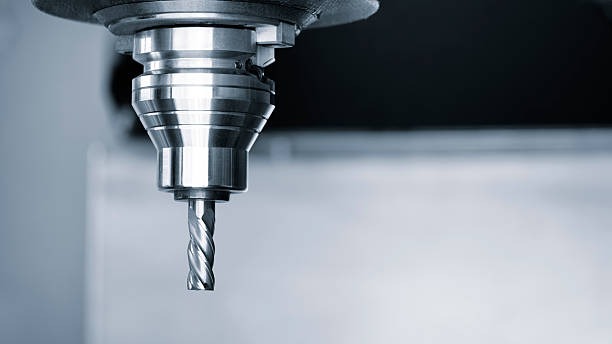
El aluminio presenta propiedades completamente diferentes a las del acero y otros metales resistentes. Su estructura blanda genera calor rápidamente, lo que provoca problemas de adherencia de la herramienta durante los procesos de mecanizado incorrectos. El husillo debe funcionar a altas velocidades manteniendo su estabilidad y un proceso eficaz de evacuación de virutas.
El material de aluminio requiere un husillo que funcione a altas revoluciones por minuto, que proporcione un par constante durante el funcionamiento y que gestione las condiciones térmicas. Estos factores permiten obtener cortes más suaves, lo que reduce las vibraciones y mejora el acabado superficial.
El proceso de mecanizado de aluminio depende de la utilización de altas velocidades de husillo. La mayoría de las operaciones necesitan velocidades que van desde De 15000 RPM a 24000 RPMEn algunas situaciones se requieren velocidades superiores a ese rango. Las altas velocidades permiten a los operarios eliminar materiales a un ritmo acelerado, logrando mejores resultados de corte que preservan la integridad de la herramienta.
El mecanizado de aluminio requiere menos torque, pero exige mantener un torque constante a la máxima velocidad de operación. El sistema mantiene una operación de corte uniforme a la vez que evita la vibración de la herramienta.
El mecanizado de aluminio se enfrenta a su mayor obstáculo en la acumulación de calor. Un husillo de alta calidad debe incluir:
• Sistemas de refrigeración por aire o por líquido
• Diseño de disipación de calor eficiente
• Protección contra la dilatación térmica
Los husillos CNC modernos utilizan cojinetes cerámicos, que reducen la fricción y permiten una rotación más rápida. Estos cojinetes ofrecen mayor precisión y una vida útil más prolongada del husillo.
La combinación de una carcasa metálica y una estructura de husillo crea un sistema que reduce eficazmente las vibraciones. El proceso de producción de piezas de aluminio con tolerancias estrictas y superficies lisas requiere este método como componente esencial.
Parámetro | Rango recomendado | Objetivo |
Velocidad del husillo | 15.000 – 24.000 RPM | Corte de alta velocidad |
Fuerza | 0,8 kW – 6 kW | Depende del tamaño de la herramienta. |
Tipo de refrigeración | Refrigeración por aire o agua | Gestión del calor |
Tipo de rodamiento | Cojinetes cerámicos | Alta precisión y durabilidad |
Diámetro de la herramienta | Hasta 16 mm | Basado en la potencia del husillo |
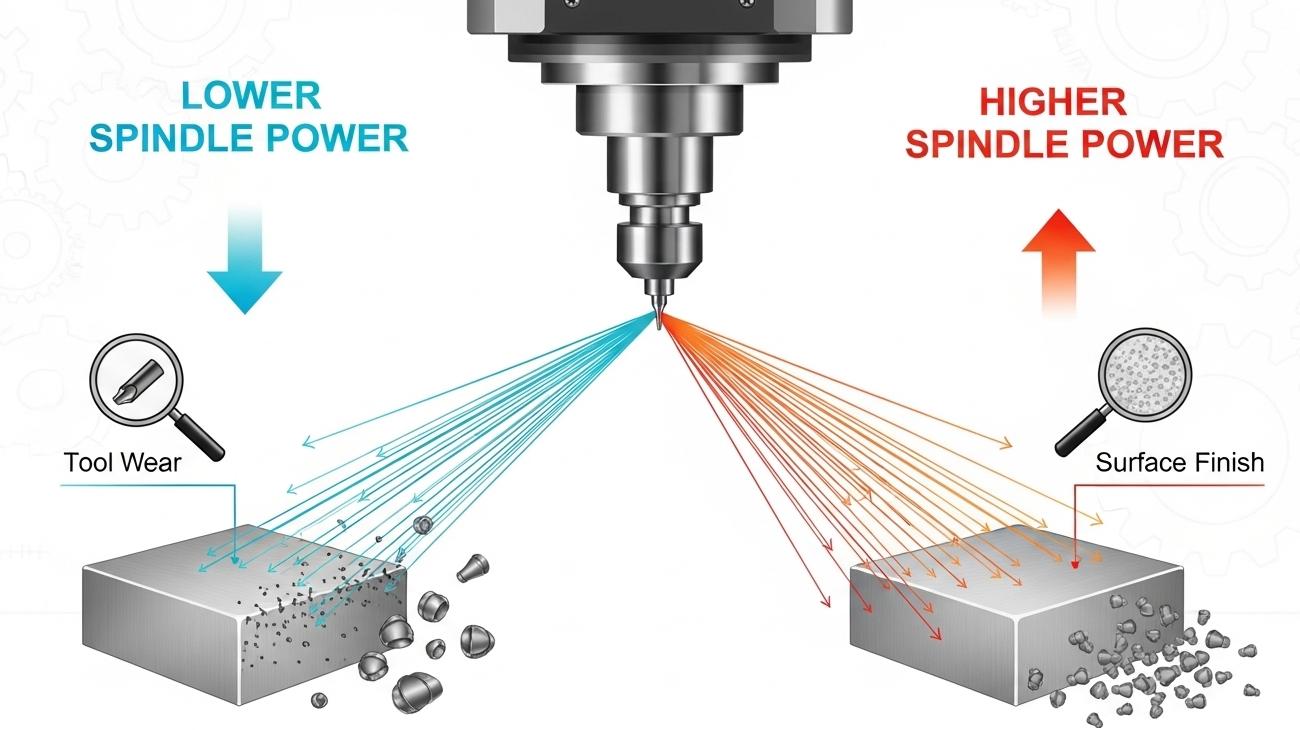
La potencia del husillo es un componente esencial para el mecanizado de aluminio, ya que determina la estabilidad del proceso de corte, el rendimiento operativo y la eficacia de las herramientas. La selección óptima de la potencia depende de tres factores principales: el diámetro de la fresa, la profundidad de corte y la intensidad del mecanizado. La máquina requiere una potencia mínima del husillo para lograr una fuerza de corte estable, pero esta condición genera vibraciones, una calidad superficial deficiente y una menor eficiencia de producción.
Aumentar la potencia del husillo no mejora los resultados en la producción. El sistema conlleva mayores gastos operativos y un mayor consumo de energía, además de incrementar innecesariamente los daños en la maquinaria sin ofrecer ventajas comparables.
El uso habitual de husillos de baja a media potencia resulta suficiente para herramientas pequeñas que realizan tareas ligeras como el grabado o el fresado superficial. Una mayor potencia del husillo es imprescindible para los operarios que manejan herramientas de corte más grandes y realizan operaciones de corte profundo, como el mecanizado de aluminio.
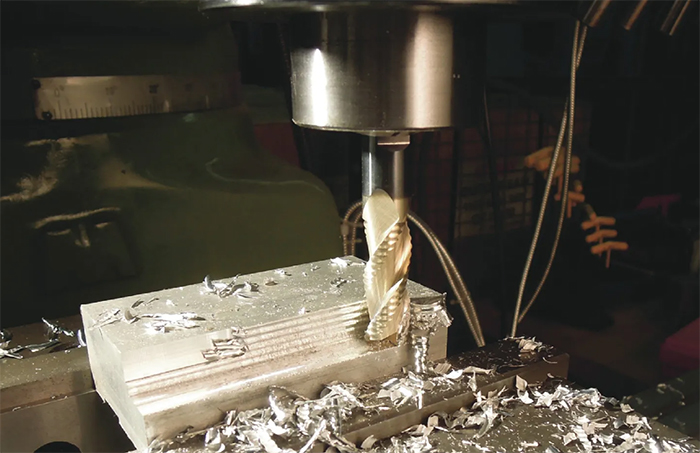
La selección correcta de la velocidad del husillo debe determinarse mediante un proceso que evalúe cómo la velocidad de rotación del husillo afecta a todo lo que ocurre durante el mecanizado del aluminio. Los materiales más blandos, como el aluminio, permiten velocidades de corte más rápidas en comparación con los metales más duros. Si se ajustan incorrectamente los parámetros de velocidad, se producirán daños rápidos en la herramienta, sobrecalentamiento y problemas en el acabado superficial.
El método óptimo comienza con revoluciones por minuto (RPM) elevadas, y los usuarios deben ajustar la velocidad de avance según las condiciones de corte, el tamaño de la herramienta y los requisitos de estabilidad de la máquina. Este método establece procesos eficientes que garantizan un corte fluido.
En este contexto industrial, la correcta evacuación de las virutas es tan importante como cualquier otro proceso. Las virutas de aluminio se acumularán en la herramienta a menos que los operarios implementen métodos de eliminación que utilicen aire comprimido o refrigerante para mantener la herramienta de corte y el husillo limpios, garantizando al mismo tiempo un rendimiento de mecanizado constante.
El mecanizado de aluminio a velocidades de husillo muy bajas produce defectos superficiales y una formación de virutas inadecuada. El aluminio requiere mayores revoluciones por minuto para un rendimiento óptimo, ya que a velocidades más bajas se produce fricción en lugar de un corte limpio.
El aluminio genera calor durante su proceso de mecanizado, y la ausencia de métodos de refrigeración adecuados, como sistemas de aire y líquidos, provoca daños en las herramientas y una menor precisión en las operaciones. El calentamiento transforma el material, lo que daña las herramientas y reduce su vida útil.
El uso de una herramienta de corte que no se ajusta a la capacidad del husillo puede ocasionar graves problemas. Los husillos de baja potencia funcionan con herramientas grandes, pero reducen la productividad, mientras que los husillos de alta potencia operan con herramientas pequeñas, lo que puede provocar daños en el producto debido a condiciones inestables.
El husillo sufrirá mayores daños cuando los trabajadores lo utilicen a plena capacidad durante jornadas laborales prolongadas, lo que reducirá su vida útil. Este proceso incrementa los riesgos de producción debido a dos factores principales: aumenta el riesgo de sobrecalentamiento y crea la posibilidad de paradas inesperadas de la máquina.
El proceso de evacuación de virutas se vuelve ineficiente, lo que provoca la acumulación de virutas y, en consecuencia, el bloqueo de la herramienta y daños en la superficie de la pieza. El sistema requiere sistemas específicos de eliminación de virutas junto con sistemas de soplado de aire para lograr operaciones de mecanizado exitosas.
Es fundamental prolongar la vida útil del husillo, ya que esto repercute directamente en dos necesidades empresariales clave: el mantenimiento de la productividad y la reducción de costes. Es necesario realizar inspecciones periódicas y que los técnicos apliquen correctamente el lubricante para mantener el rendimiento del husillo y prevenir el desgaste de los componentes.
El husillo requiere limpieza, ya que las virutas y las partículas de polvo generan problemas de rendimiento debido a su efecto contaminante. La implementación de sistemas de refrigeración adecuados, junto con parámetros de corte equilibrados, dará como resultado mejores resultados de mecanizado y una vida útil prolongada para el husillo.
Los distintos materiales requieren características de husillo diferentes. El aluminio destaca porque permite el mecanizado a alta velocidad, a diferencia de los metales más duros.
Material | Velocidad del husillo | Requisito de par | Notas |
Aluminio | Alto | Bajo a medio | Mecanizado rápido |
Acero | Bajo | Alto | Requiere energía |
Titanio | Bajo | Muy alto | Sensible al calor |
Plástica | Alto | Bajo | Fácil de cortar |
Considere su solicitud
Se requieren diferentes configuraciones de husillo para operaciones de grabado y corte ligero, y para operaciones de fresado pesado. Seleccione las especificaciones una vez que haya identificado su caso de uso.
Ajuste el tamaño de la herramienta a la potencia del husillo.
Las herramientas de mayor tamaño requieren más potencia que las herramientas más pequeñas, que funcionan mejor a mayor velocidad con menor consumo de energía.
Enfoque en la refrigeración y la durabilidad
Un husillo que incorpore sistemas de refrigeración adecuados junto con rodamientos de alta calidad proporcionará una vida útil prolongada y una mayor estabilidad del rendimiento.
Ciclos de mecanizado más rápidos
La selección del husillo permite alcanzar mayores velocidades de corte junto con mejores velocidades de avance, lo que reduce la duración total del mecanizado a la vez que aumenta la productividad.
Mejor acabado superficial
La correcta alineación del husillo facilita la operación de corte, lo que permite obtener bordes limpios y acabados superficiales perfectos sin necesidad de trabajos de procesamiento adicionales.
Menor desgaste de las herramientas
La elección correcta del husillo evita que se produzca un exceso de calor y fricción, lo que se traduce en una mayor vida útil de la herramienta y menores gastos de reemplazo.
Mayor precisión y exactitud
Un funcionamiento estable del husillo evita las vibraciones, lo que ayuda a mantener un rendimiento de corte constante, necesario para cumplir con las estrictas tolerancias de las piezas de aluminio.
Menor coste total de producción
La combinación de un mecanizado eficiente, un menor desgaste de las herramientas y tiempos de ciclo más rápidos conlleva una disminución de los gastos de fabricación durante todo el período de producción.
El proceso de selección de una máquina CNC adecuada requiere la misma importancia que el proceso de selección de un husillo adecuado. CNC Yangsen proporciona Máquinas CNC avanzadas Estas máquinas ofrecen capacidades de mecanizado de aluminio de alta velocidad, manteniendo una estabilidad y precisión operativas excepcionales. Su diseño combina estructuras rígidas con sistemas de husillo de alto rendimiento, lo que garantiza un funcionamiento fiable para aplicaciones industriales.
1. ¿Cuál es la velocidad ideal del husillo para el aluminio?
La velocidad ideal del husillo para el mecanizado de aluminio suele oscilar entre 15 000 y 24 000 RPM, dependiendo del tamaño de la herramienta y la operación de mecanizado. Las velocidades más altas permiten obtener cortes más suaves y una mejor evacuación de las virutas, especialmente al utilizar herramientas más pequeñas.
2. ¿Es necesario un par de torsión elevado para el mecanizado de aluminio?
El aluminio no requiere un par de torsión extremadamente alto en comparación con materiales más duros como el acero. La capacidad de mantener un par de torsión constante a todas las velocidades resulta fundamental para garantizar un corte uniforme y evitar vibraciones en la herramienta.
3. ¿Qué sistema de refrigeración es el mejor para los husillos CNC?
Tanto los husillos refrigerados por aire como por agua funcionan eficazmente en tareas de mecanizado de aluminio. Los sistemas de refrigeración por agua se convierten en la opción preferida para periodos de producción prolongados, ya que controlan mejor la temperatura y prolongan la vida útil del husillo.
4. ¿Se puede utilizar un solo husillo para todos los materiales?
Un solo husillo no puede ofrecer un rendimiento óptimo con todos los materiales, ya que cada uno requiere diferentes ajustes de velocidad y par. El aluminio necesita alta velocidad, mientras que materiales más duros como el acero requieren menor velocidad y mayor par.
5. ¿Cómo afecta la potencia del husillo a la calidad del mecanizado?
La potencia del husillo determina el tamaño máximo de herramienta y la profundidad de corte que se pueden utilizar sin perder estabilidad. Una potencia suficiente permite operaciones de corte fluidas, lo que se traduce en un mejor acabado superficial y una mayor eficiencia de mecanizado.
6. ¿Por qué se utilizan rodamientos cerámicos en los husillos CNC?
Los rodamientos cerámicos se utilizan porque generan menos fricción y calor que los rodamientos de acero tradicionales. Esto permite que el husillo funcione a mayor velocidad, lo que se traduce en un mejor rendimiento y una mayor vida útil.
La selección del husillo CNC adecuado para el mecanizado de aluminio es fundamental para lograr una eficiencia operativa óptima, una precisión exacta y un rendimiento duradero. Cada elemento, desde el funcionamiento a alta velocidad hasta las soluciones de refrigeración eficientes y el mantenimiento constante del par motor, influye en el éxito de las operaciones de mecanizado.
Una inversión en husillos de alta calidad mejora el rendimiento de la producción, a la vez que reduce el tiempo de inactividad de la máquina y los gastos en herramientas. CNC Yangsen ofrece máquinas CNC fiables que cumplen con los requisitos de fabricación modernos para el mecanizado de aluminio. Descubra nuestra gama hoy mismo. y lleva tu mecanizado de aluminio al siguiente nivel.